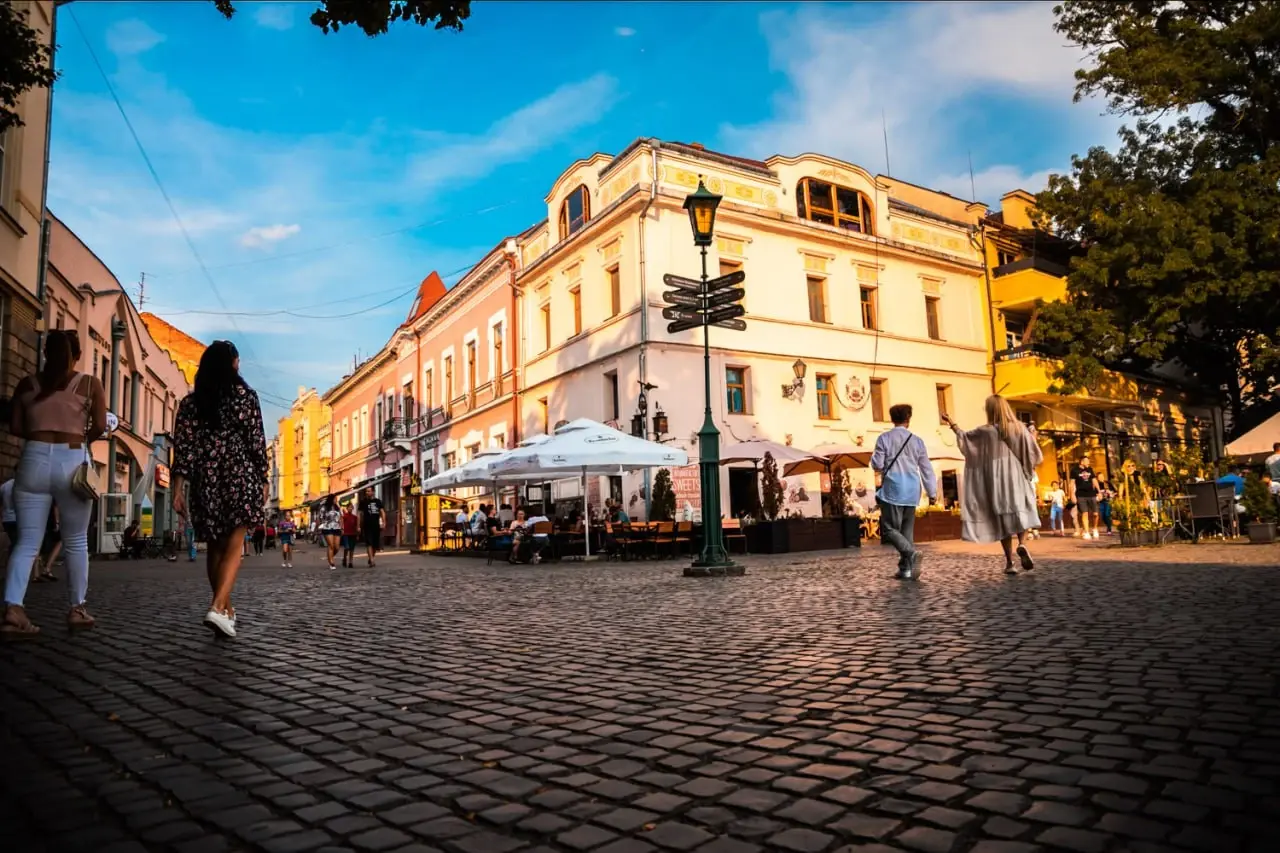
Interesting facts about Uzhhorod: a selection of facts that will surprise you
Uzhhorod seems like a city that can be seen in one day. But the more you learn about it, the more you understand - behind the calm facade hides a city with an extremely rich historical past and unexpected character.
The city on seven hills
Uzhhorod is built on seven hills and this is not just a beautiful detail. Rome, Istanbul, Prague, Barcelona - and Uzhhorod are on the same list. The city is spread out on seven hills, and this is clearly felt during a walk: the streets sometimes rise up, then descend to the river, opening unexpected views at every turn.
Closer to Vienna than to Kyiv
Uzhhorod is closer to ten other European capitals than to Kyiv. The distance to Kyiv is 811 km, while to Vienna it is about 600 km, to Budapest - 300 km, to Warsaw - almost 560 km, to Bratislava - 550 km, to Prague - 740 km.
This is not just a geographical curiosity, but a key to understanding the character of the city. For centuries, Uzhhorod lived in the orbit of Central European culture and this is felt in the architecture, cuisine, traditions and even in the pace of street life.
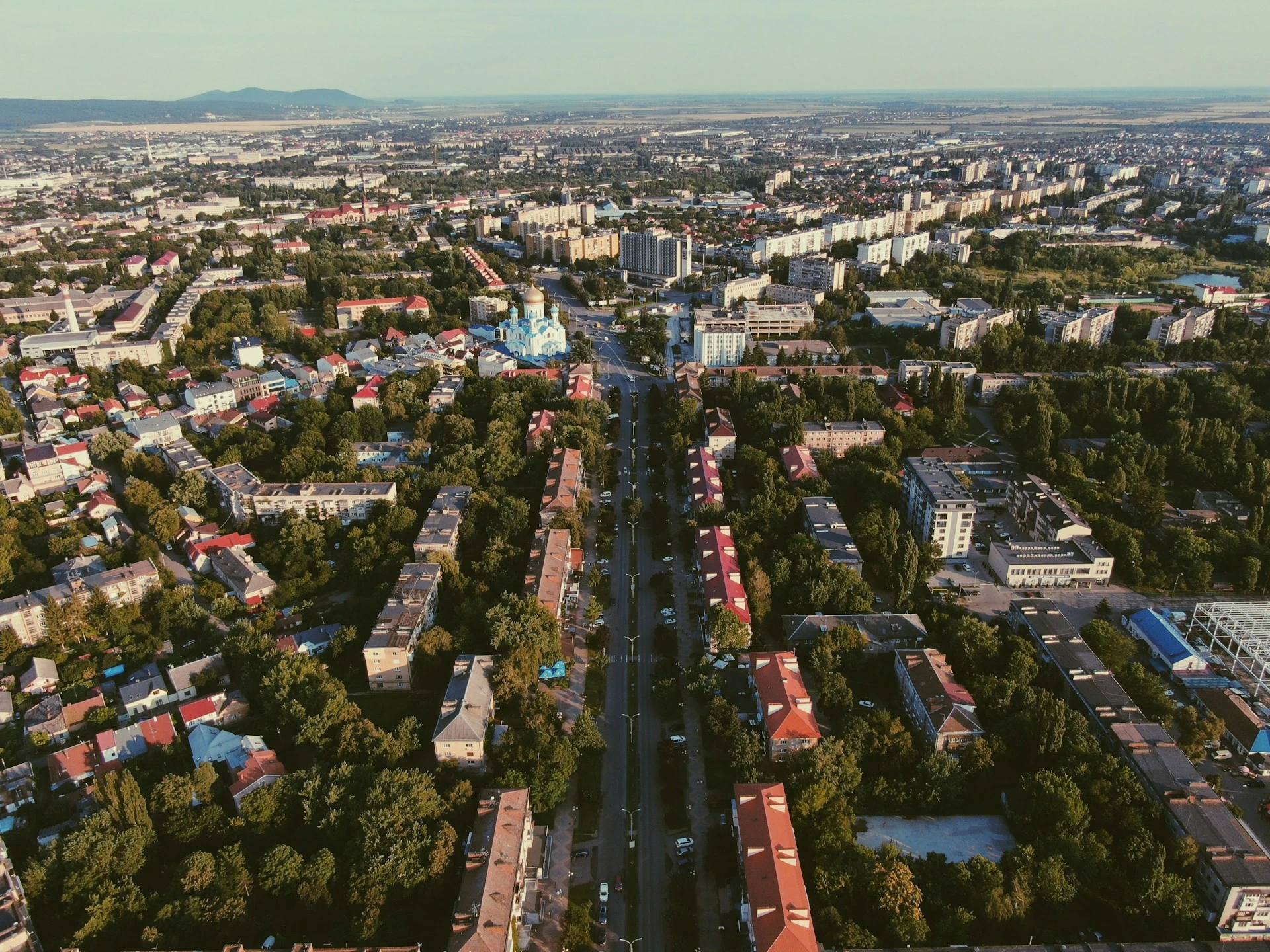
The name of the city changed along with the authorities
The first written mention of the city was made by the Arab traveler Al-Idrisi in 1154. In fact, until the end of World War I, the city had only one name: Ungvar.
In the middle of the 19th century, under the influence of the rise of national movements of the Ruthenian population of the region, the name Uzhhorod appeared. However, it began to be widely used only after World War I, when Transcarpathia became part of Czechoslovakia.
That is, the name Uzhhorod, which seems so natural, is relatively young. The city is over a thousand years old, and the name is a little over a hundred.
Uzhhorod: an unknown capital
In 1919, Uzhhorod was the capital of Subcarpathian Rus' as part of Czechoslovakia. The smallest regional center of Ukraine was once the capital of an entire region, and it was during that Czechoslovak period that the city received most of its most beautiful architectural structures.
Korzo Street - the legacy of the Italian counts
The street has a strange name for the Ukrainian ear. Korzo in Italian literally means a street for walks. It was named so back in the days when the city was under the rule of the Italian count family of Druget, who owned it for 360 years. Almost four centuries of Italian influence and Korzo Street still reminds us of this every day.
Eight embankments: a record for a small city
Uzhhorod has eight embankments. The first and most charming was, is and will be the Independence Embankment.
Eight embankments in a city with a population of just over a hundred thousand - this is truly unusual. The Uzh River is not just a reservoir here, but the axis around which all city life revolves. A walk along the embankments is the best way to feel the rhythm of Uzhgorod.
Sakura: a gift from the Czechoslovak period
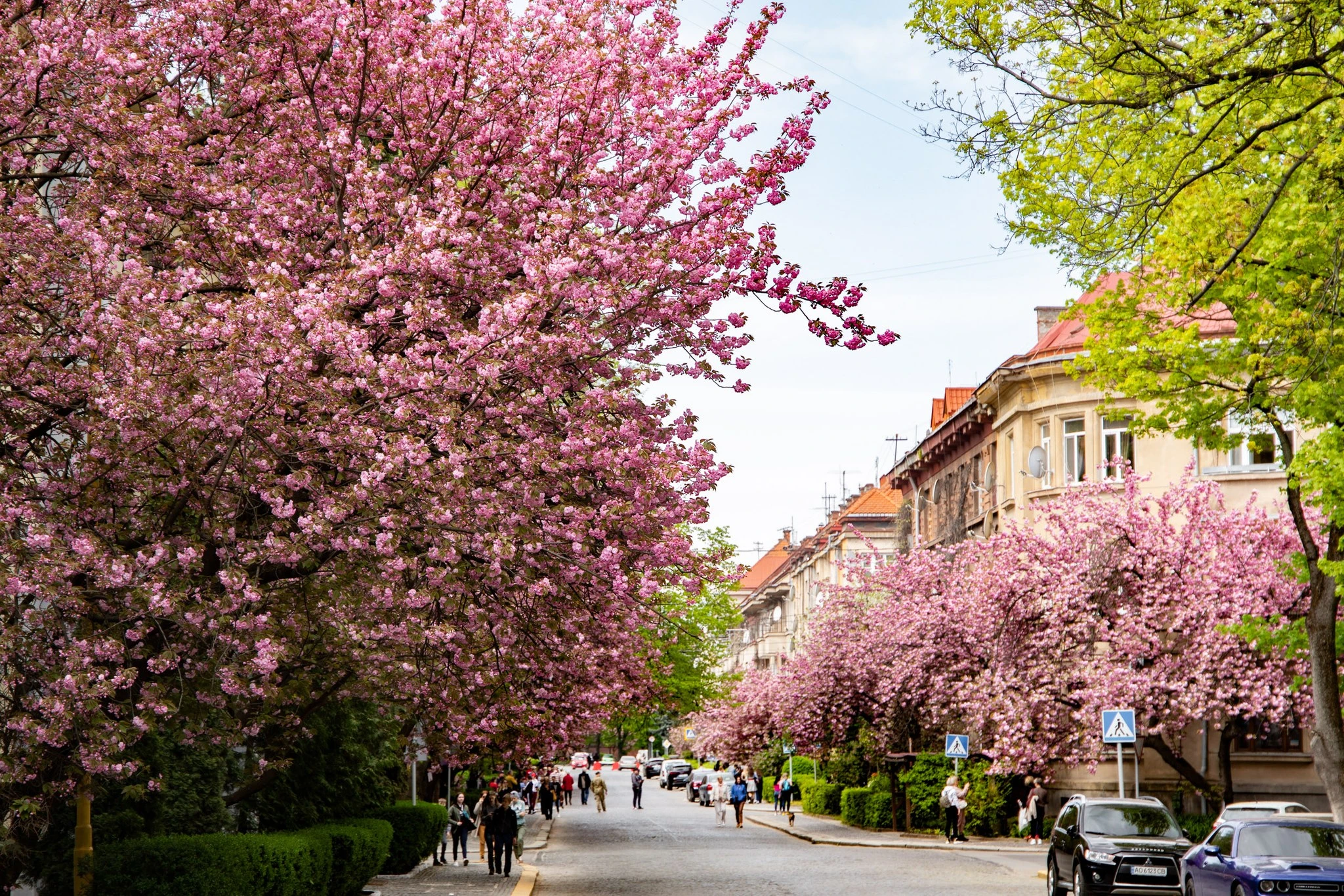
Sakura has become a symbol of Uzhgorod, but few people know where it came from. The first sakura trees in Uzhgorod appeared back in the Czechoslovak period from 1919 to 1939. The tree has taken root well, because the local climate contributes to this. The oldest sakura alley is located on Oleksandra Dovzhenko Street, it is the most popular tourist location in the city during flowering in the second half of April.
That is, sakura in Uzhgorod is a hundred years of tradition, not a tourist fad of recent years.
A Castle with a Thousand-Year History and the White Ghost
Uzhhorod Castle is not just a tourist attraction. The history of the medieval castle itself is over a thousand years old. Everyone knows about the White Ghost in the local castle or the Pogan-Diva in Nevytsky. It is believed that this is the ghost of Countess Druget, who still wanders the castle corridors. Whether to believe it or not is a personal matter for everyone. But the atmosphere in the castle is truly special.
Grapes on the city's coat of arms: and this is no coincidence
According to legend, Zeus was angry with the god of wine and fun Bacchus and sent him to the Carpathians. Bacchus, going into exile, took a grapevine with him, planted it here and taught the locals how to make wine.
Transcarpathian winemaking is still alive, and if you haven't tasted local wine yet, this is a serious gap that should be filled during your visit.
A city of festivals that never gets boring
The Brides' Parade, the St. Nicholas' Parade, the Uzhgorod Regatta, the Palachinta Festival, night bike races and night races - Uzhgorod has a busy calendar of events all year round. There is always something going on here, and even an ordinary weekend can turn into a small holiday.
Uzhgorod is a city that opens up gradually. You can't see everything here in one day and form a final opinion. We must return - in the spring for the cherry blossoms, in the summer for the regatta, in the fall for the grapes and young wine.
Emigrand Art Hotel is an ideal point for such an acquaintance with the city. Located in the very center, next to the embankment, Korzo Street and most of the city's tourist locations. The hotel itself is part of the city's art space with the concept of pop art and Transcarpathian identity, inspired by Andy Warhol, whose full-length monument stands at the entrance.
Uzhhorod surprises those who are ready to be surprised. And Emigrand Hotel is the best place to start this discovery every morning.

Other posts
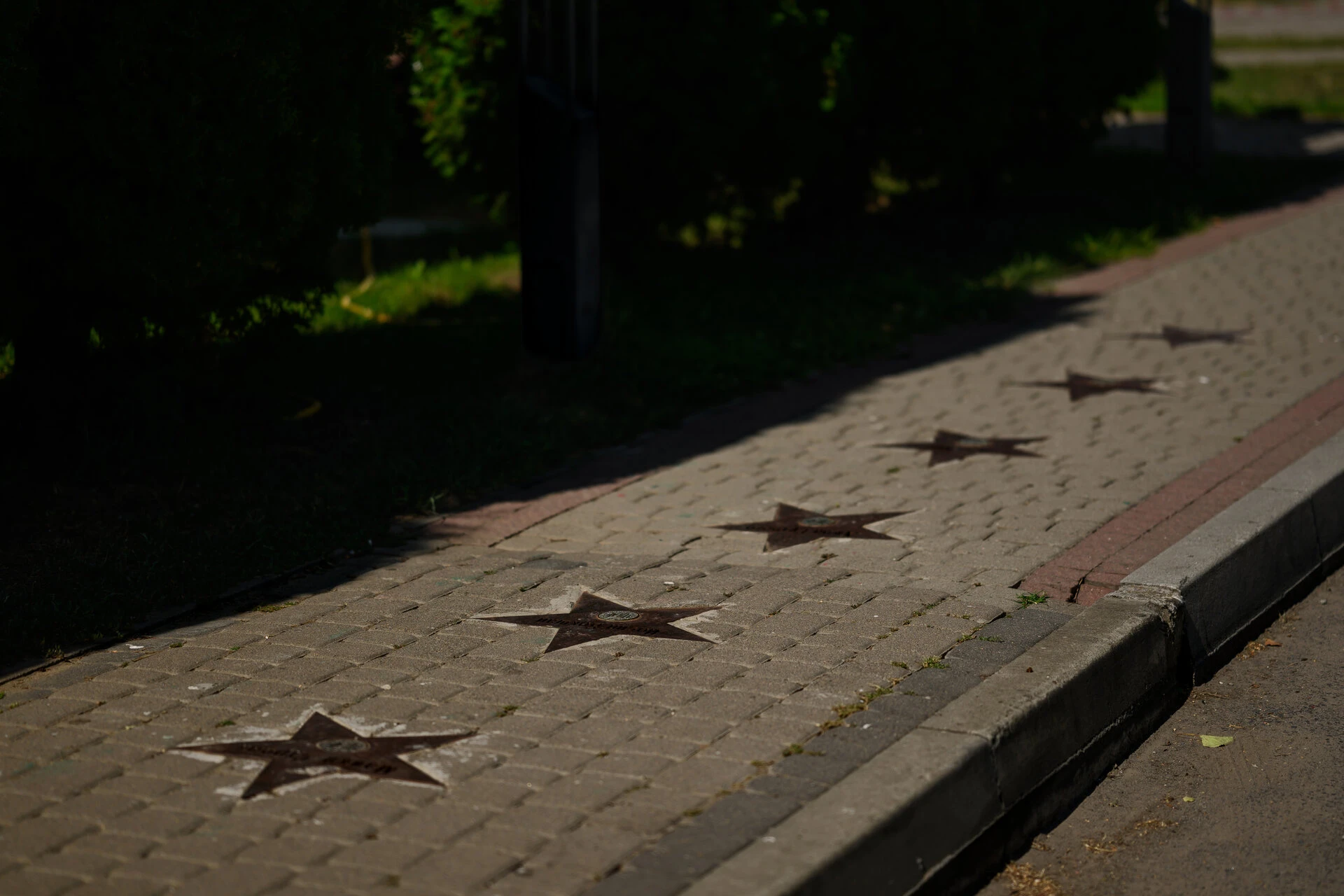
Hollywood has its own Walk of Fame, where stars are engraved on the pavement with the names of people who changed the world of cinema, music, and culture. Uzhhorod has its own star alley - much more intimate, but no less interesting with the stories behind each name.
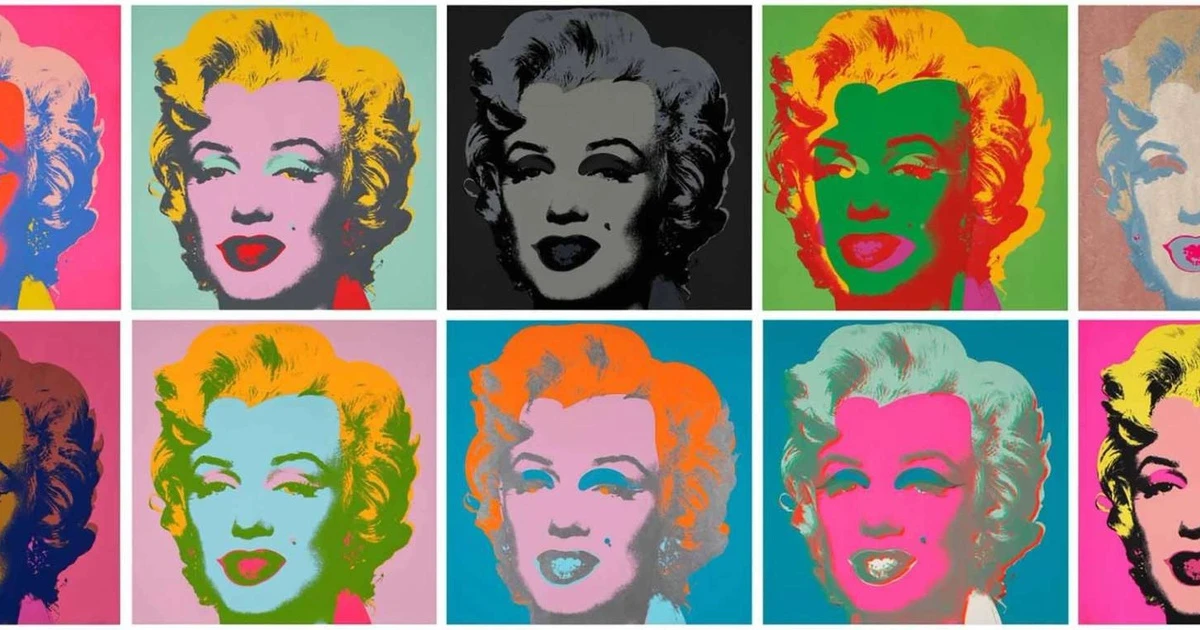
Andy Warhol once said - in the future everyone will have their 15 minutes of fame. This phrase has long become iconic. But the artist himself seems to have done everything possible to ensure that some people remain famous much longer.
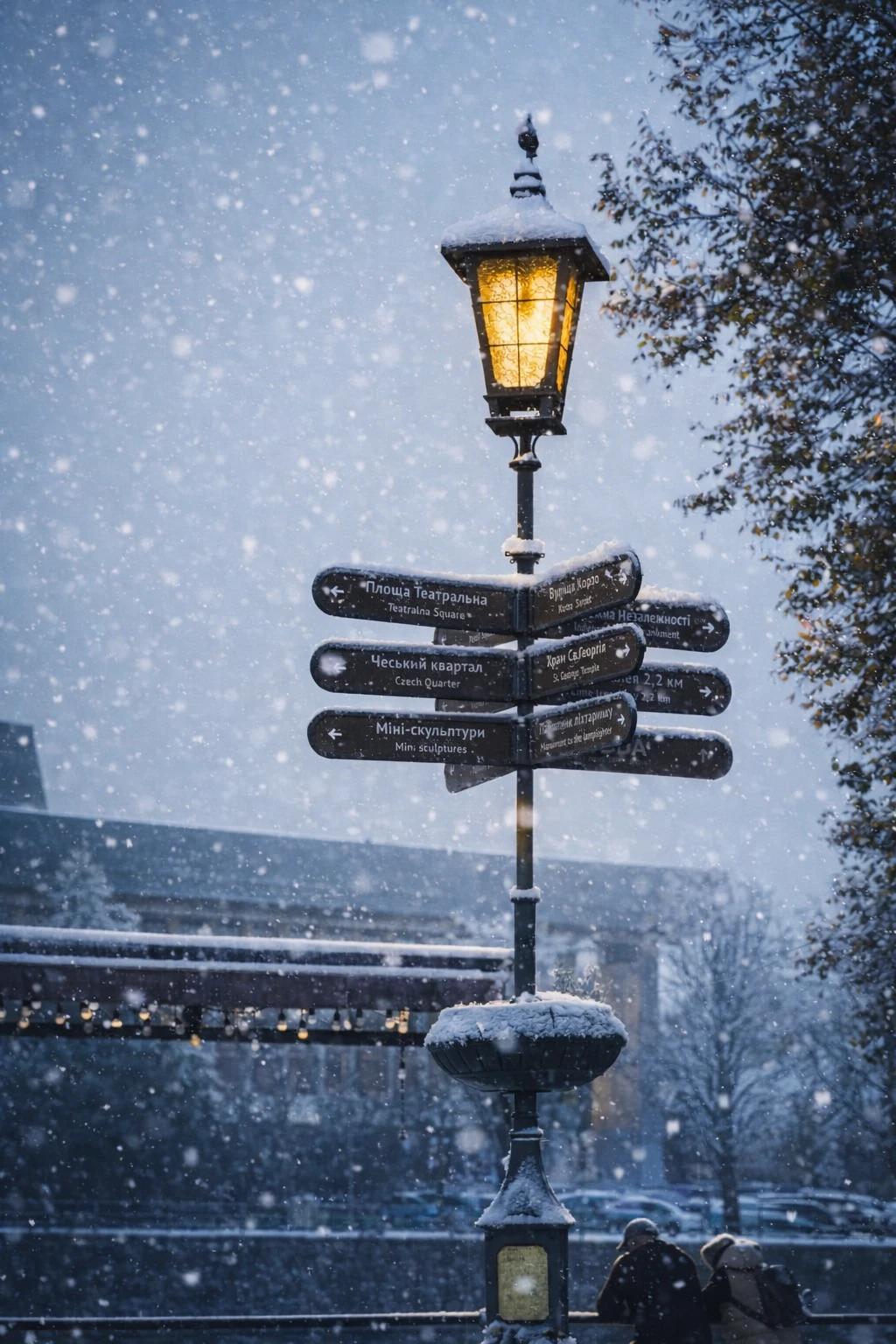
There is such a moment in Uzhgorod - when the day gives way to the night, when the sun has already hidden behind the roofs, but the sky is still bright. It is then, one by one, that the street lamps begin to light up. The first lights appear on the embankment, then on the Korzo, near the town hall, on the bridge over the Uzh.