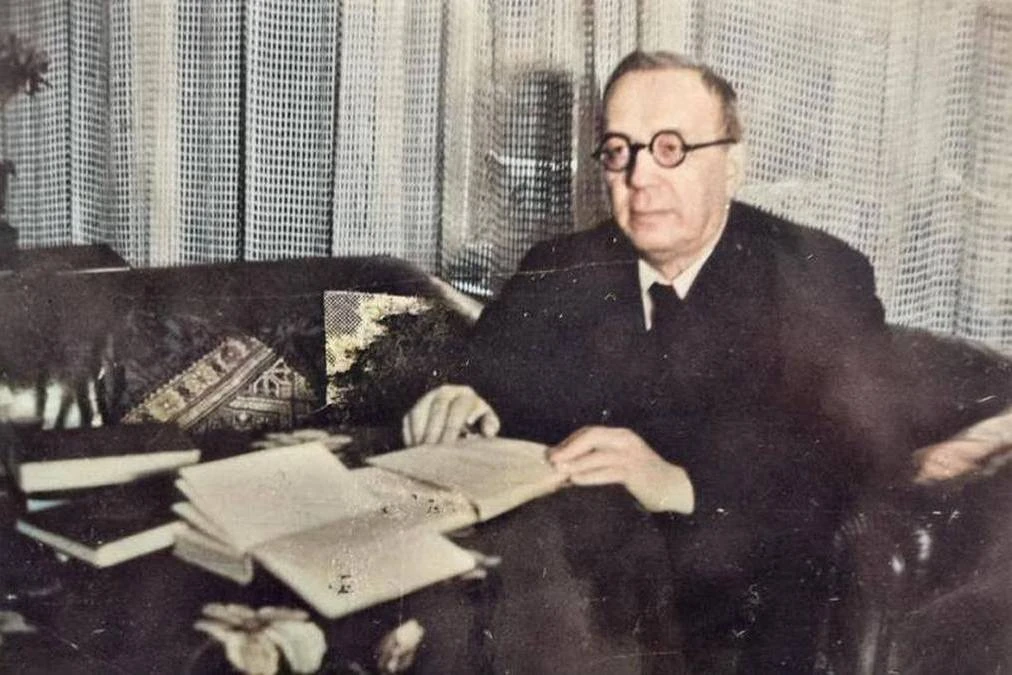
Avhustyn Voloshyn: A Historical Figure of Uzhhorod
Uzhhorod is a city where history does not always hide behind museum doors. It is etched into street names, old buildings, memorial plaques, and monuments. Sometimes, a simple walk through the city streets is enough to encounter reminders of the people who once shaped the development of Transcarpathia.
One such figure is Avhustyn Voloshyn—an educator, priest, cultural figure, scholar, civic and political leader, and President of Carpatho-Ukraine. Today, streets in various cities bear his name, and in Uzhhorod, his memory is preserved by more than just books and archival documents. A monument to Avhustyn Voloshyn can be seen while strolling along Independence Embankment, not far from the famous Linden Alley.
Avhustyn Voloshyn: Teacher, Educator, and Cultural Figure
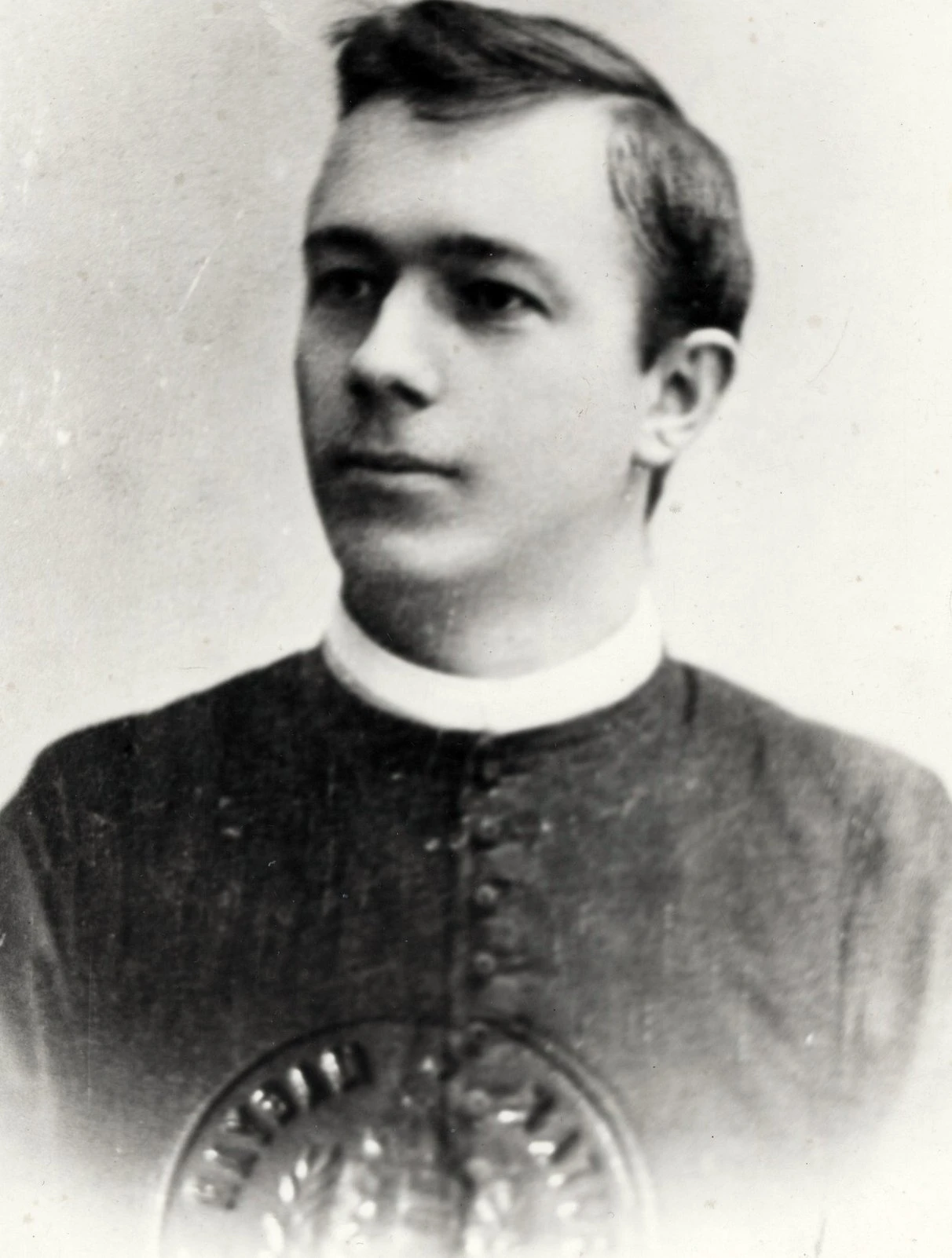
Avhustyn Ivanovych Voloshyn was born on March 17, 1874, in the village of Kelechyn, Transcarpathia, into a clergyman's family. He attended the Uzhhorod Gymnasium, later studied theology, and was ordained as a priest in 1897. Subsequently, he pursued a degree in education in Budapest.
From 1900, Voloshyn worked as a professor at the Uzhhorod Teachers' Seminary, serving as its director from 1917 to 1938. He taught, developed pedagogical materials and school textbooks, and focused on the methodology and organization of education. According to the Ukrainian Institute of National Memory, he authored dozens of textbooks, grammar books, readers, and primers. His activities extended beyond the educational institution. Voloshyn participated in the work of cultural and educational organizations, headed the Pedagogical Society of Subcarpathian Rus', played an active role in the Prosvita Society, and worked in the fields of publishing and journalism.
Therefore, when discussing prominent figures of Transcarpathia today, Avhustyn Voloshyn’s name is mentioned in contexts beyond just politics. A significant part of his life was dedicated to education, culture, and the development of the region's civic life.
Avhustyn Voloshyn and Carpathian Ukraine
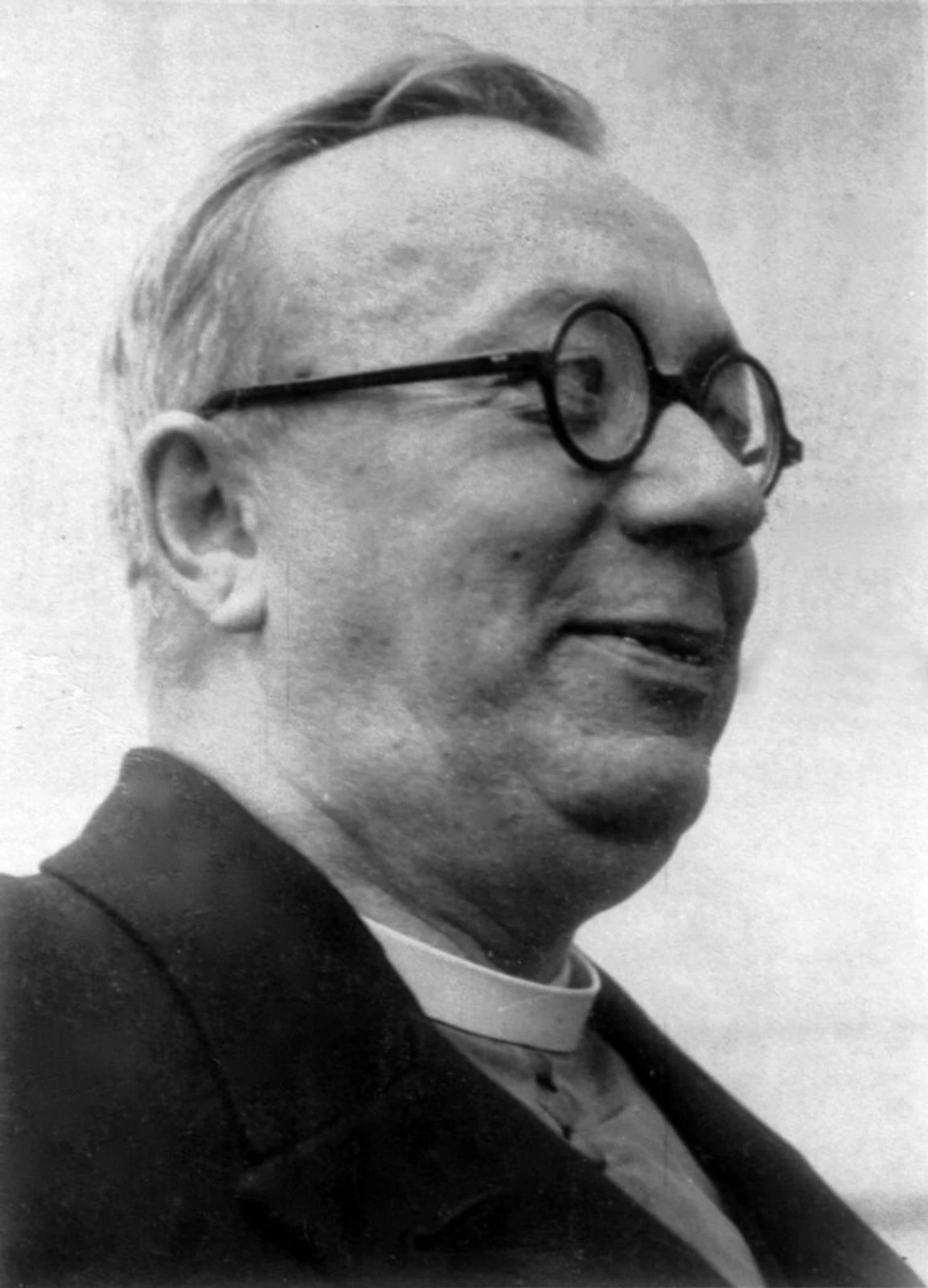
A distinct phase of his biography is linked to politics. Voloshyn began his active civic and political work as early as the late 1910s. From 1925 to 1929, he served as a member of the Czechoslovak parliament, representing the Christian People's Party.
In the autumn of 1938, following a shift in the political landscape of Czechoslovakia, Voloshyn became the head of the autonomous government of Subcarpathian Rus'.
The events of March 1939 marked a pivotal episode in his political career. On March 14, Avhustyn Voloshyn proclaimed the independence of Carpathian Ukraine. The following day, March 15, the Diet of Carpathian Ukraine convened in Khust; it adopted the necessary legislation and elected Voloshyn as president.
This independence was short-lived. In March 1939, Hungarian troops occupied the territory of Carpathian Ukraine, and Voloshyn, along with his government, went into exile abroad. He settled in Prague, where he continued his scholarly and pedagogical work. In May 1945, he was arrested by Soviet security services and taken to Moscow. On July 19, 1945, Avhustyn Voloshyn died in the prison hospital of Butyrka Prison.
In 2002, Avhustyn Voloshyn was posthumously awarded the title of Hero of Ukraine. This state recognition honored his long-standing contributions to education and to the cultural and civic life of Transcarpathia, as well as his role in the events surrounding Carpathian Ukraine in 1938–1939.
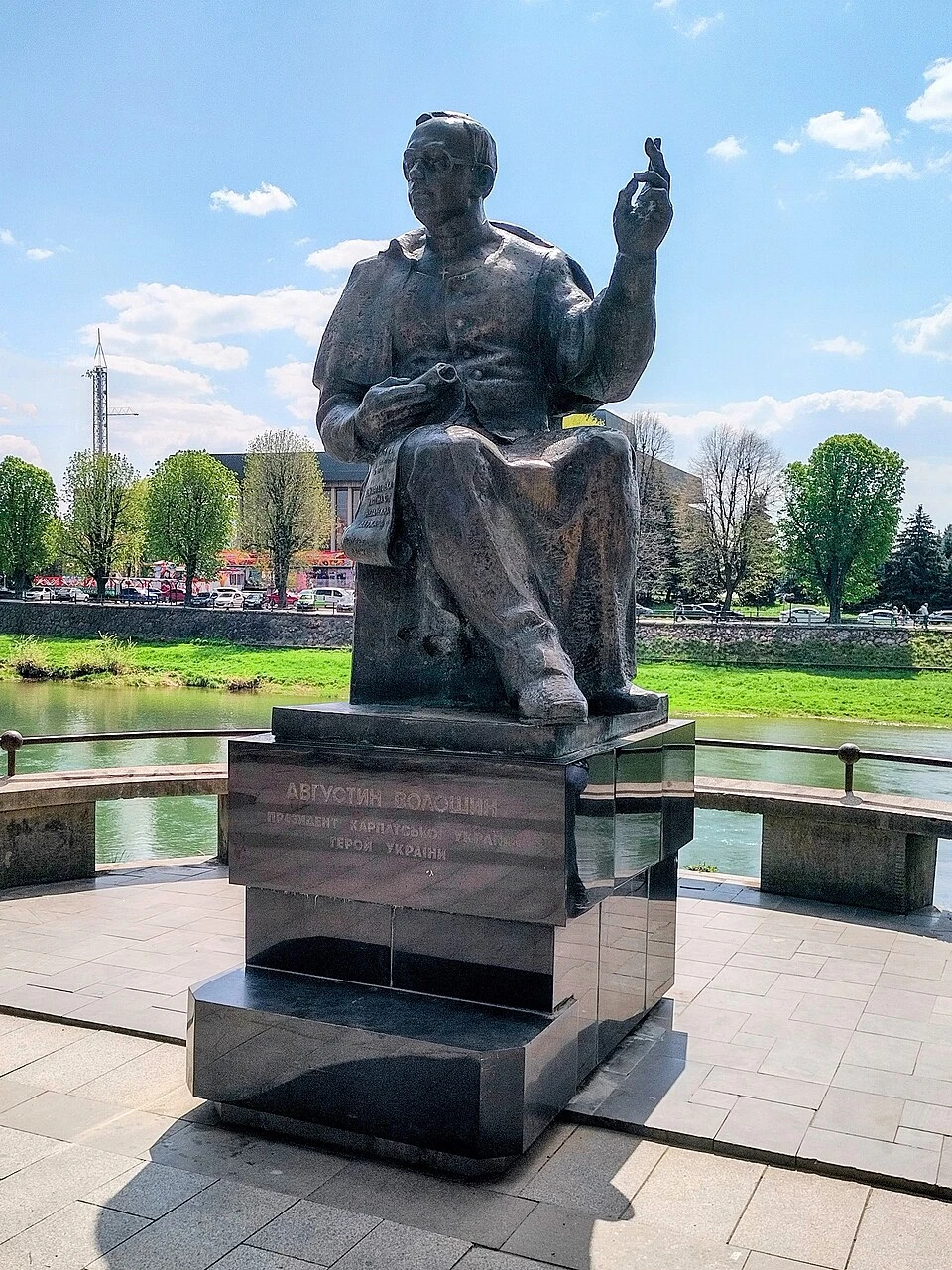
Monument to Avhustyn Voloshyn in Uzhhorod
Today, the monument to Avhustyn Voloshyn in Uzhhorod serves as a place to reflect on this chapter of history. The monument honoring the President of Carpatho-Ukraine was unveiled on August 22, 2002, on Independence Embankment.
Interestingly, one of Uzhhorod’s most famous walking spots—the renowned Linden Alley—runs right next to the monument. Stretching along the Uzh River, it is a distinctive feature of the city's landscape. Thus, visiting the monument can easily be combined with a riverside stroll, relaxing by the water, and exploring other local landmarks.
Avhustyn Voloshyn Street in Uzhhorod
Uzhhorod offers another reminder of the historical figure Avhustyn Voloshyn: a street in the city center named after him.
Located near the Uzh River embankment, the street is notable for more than just its name. It preserves numerous historical and architectural landmarks, including the Roman Catholic Church of St. George, the building of the former St. Gisela Girls' Gymnasium, and other points of interest.
There is also a direct connection to Voloshyn himself here; the house where he lived and worked is located at No. 36. A memorial plaque has been installed on the building. Another important site linked to his work is the building on Kapitulna Street, which once housed the teachers' seminary. It was there that Voloshyn served as a professor and later as the director. Today, a memorial plaque is also mounted on the building's façade.
How to see the Uzhhorod of Avhustyn Voloshyn’s time
The city's history is interesting to explore beyond just dates; you can literally walk through it, step by step.
You can start your walk at Independence Embankment (Naberezhna Nezalezhnosti) and the monument to Avhustyn Voloshyn, stroll along the Linden Alley, and then head toward the city center and the street named after him. From there, you can continue the route to Kapitulna Street, where another reminder of his educational career remains.
This route doesn't take much time, yet it allows you to see several different facets of Uzhhorod—the embankment, old streets, historic buildings, and sites connected to a man who dedicated many years to education and public life in the region.
That is why, when planning what to see in Uzhhorod, it is worth setting aside some time not only for the most famous tourist attractions but also for these historical details.
If you are staying at the Emigrand Art Hotel, this kind of walk is an easy way to get to know the city. Uzhhorod is compact, making it convenient to combine many of its historical sites into a single route.
And along the way, you can simply take in the surroundings: the old façades, the Uzh River, the trees of the Linden Alley, the cozy streets, and the details one might easily overlook without knowing their history. For it is precisely such details that make up the real Uzhhorod—a city where the past remains part of everyday life.

Other posts
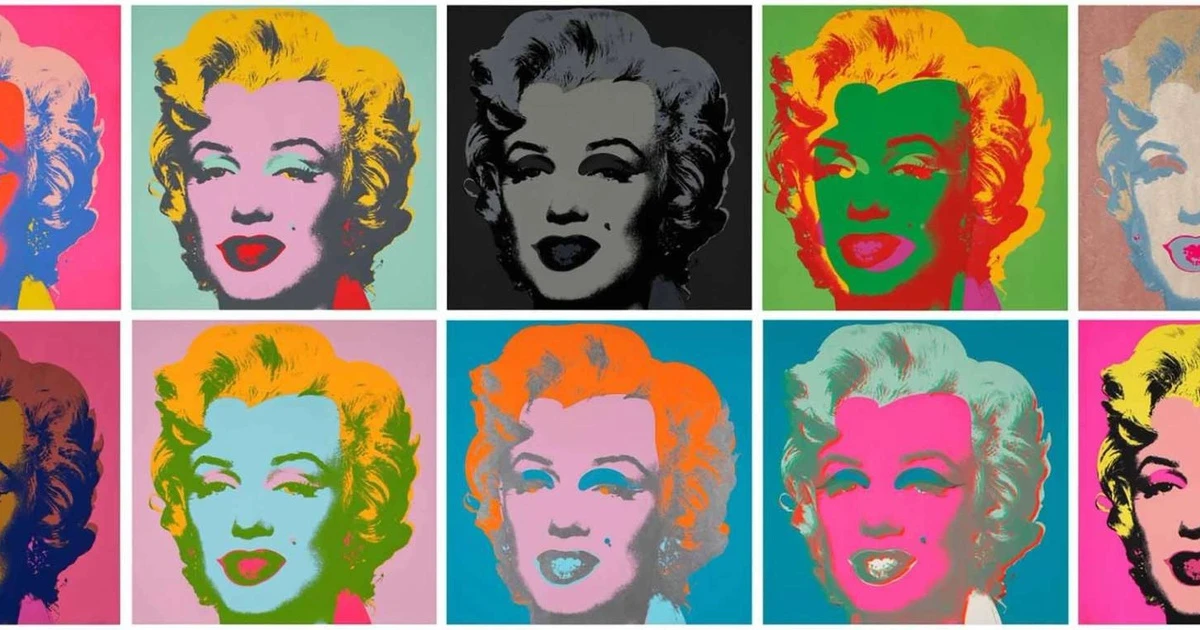
Andy Warhol once said - in the future everyone will have their 15 minutes of fame. This phrase has long become iconic. But the artist himself seems to have done everything possible to ensure that some people remain famous much longer.

Uzhhorod wakes up with the aroma of freshly ground coffee. It slowly spreads through the narrow streets of the historic center, emanating from small coffee shops and seemingly setting a special rhythm for the entire city.

Anyone who has ever traveled with children or tried to have a quiet meal at a restaurant with a small “energizer” knows this inner state of tension. Hot coffee that has time to cool completely, pizza eaten in a hurry in three minutes, and constant supervision...